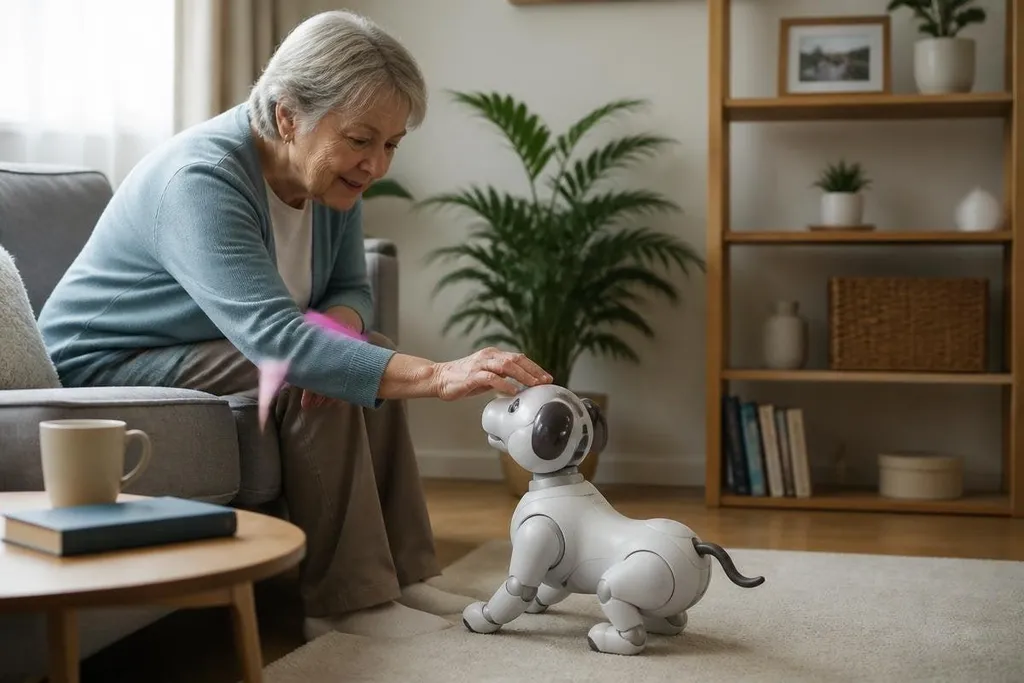
Touch, movement, or nearby speech can prompt a response from a robot pet. That response gives the owner something to do each day, but it doesn't make the machine a living animal.
For an older person living alone, a family testing a pet-free home, or a robotics buyer studying social machines, the useful question is practical: can a robot pet create a steady routine without pretending to replace human care?
- Robot pets turn simple actions into repeated daily contact.
- Sensors and software shape the response, not animal feelings.
- Noise, charging, privacy, and repair costs decide whether the bond lasts.
The routine does the real work
A living pet creates a pattern around feeding, play, cleaning, and movement. The robot can create a smaller version of that pattern through touch, sound, scheduled activity, or a request to interact.
That pattern matters because companionship often includes repeated contact, not only conversation. A person may check on the robot in the morning, move it from a chair, or respond when it makes a sound. Each act gives the day a small task and a clear response.
The machine does this through sensors and programmed behavior. A touch sensor can detect contact. A microphone can register nearby speech. Motors can move the head, tail, or body after the software selects a response.
The result can feel social because the robot reacts at the right moment, even though no feeling sits behind the reaction. That limit needs plain language: a robot pet can answer a person, but it cannot care about them or notice a health problem in the way a person might.
Why the response can feel personal
People bring their own meaning to repeated behavior. If a robot turns toward a familiar voice, the owner may read that action as recognition. If it reacts to a stroke or a lifted body, the owner may read the response as trust or comfort.
The software does not need to copy an animal perfectly to create that reading. A small delay, a change in movement, or a familiar sound can give the owner a reason to respond. That is enough to make the interaction feel less like pressing a button.
The effect depends on fit. A person who wants quiet company may prefer slow movement and low-volume sounds. Someone who wants play may need a robot with more movement and a wider set of responses. A buyer should check the behavior list instead of relying on a picture or a short video.
Claims about robot pets need more than a short demo. Robot24.com social robot reporting can tie a product to its maker, release date, listed behaviors, and any reported trial, so you can compare companionship claims with what the robot actually does. That matters before the limits become part of the product.
The limits are part of the product
Robot pets need power, floor space, software, and care from the owner. A charging stop can break a routine. A loud motor can make the robot hard to keep near a bed or desk. A damaged shell or failed sensor can end the interaction until a repair is available.
Privacy also needs a direct answer. Any model with a microphone, camera, or network connection may collect data, depending on its design and settings. Before buying, check what the robot records, where that data goes, how long it stays there, and whether the main features work without an account.
The emotional limit matters just as much. A robot pet may ease an empty room for a short period, but it cannot visit, give physical care, or replace family, friends, or trained staff. Treating it as a small social tool leads to a better decision than treating it as an animal in metal and plastic.
A buyer's decision check
Use this list before you compare models:
- Set the task: Decide if you want a daily prompt, light play, sound in the room, or a machine for a child to study.
- Check the response: Count the actions the robot can detect and the replies it can produce.
- Measure the noise: Find the motor and speaker levels in a real room, not only in a product video.
- Read the data rules: Look for camera, microphone, network, storage, and account details.
- Price the upkeep: Add charging parts, batteries, repairs, paid software, and shipping.
- Plan the handoff: Decide who will reset, charge, clean, and repair it when the owner cannot.
That last point can decide the purchase. A robot pet needs a human caretaker, even when its purpose is to keep someone company.
I'd buy one for a defined routine, such as daily interaction for a person who wants a quiet machine nearby, but I'd skip any model that hides its data settings or repair path. The next useful test for this category is not a longer demo; it's whether owners still charge the robot and interact with it after six months.