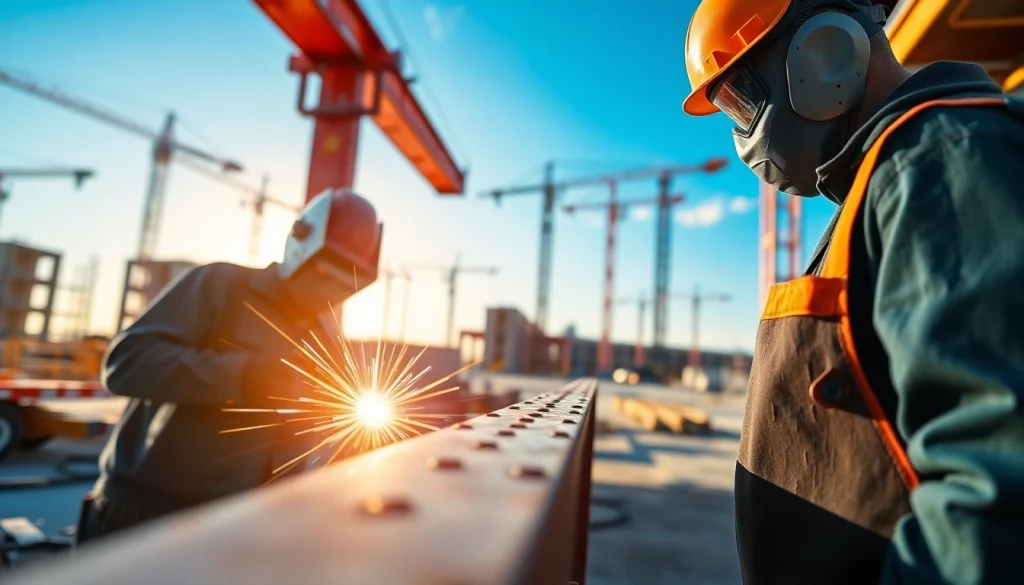
Understanding Structural Steel Welding
Definition and Importance of Structural Steel Welding
Structural steel welding is a fundamental aspect of modern construction and metal manufacturing, involving the joining of steel components to create robust structures such as bridges, buildings, and industrial facilities. This process is crucial not only for the assembly of new structures but also for maintenance, repairs, and retrofitting of existing ones. The integrity of welded joints directly impacts the safety and durability of the structures, making mastery of this technique essential for welders and engineers alike. By effectively utilizing structural steel welding, construction projects can achieve superior strength, resilience, and efficiency.
Common Applications of Structural Steel Welding
The applications of structural steel welding are extensive and varied. Some of the most prevalent applications include:
- Buildings: Used in the framework of skyscrapers, commercial buildings, and residential homes, ensuring strength and stability.
- Bridges: Essential in constructing both pedestrian and vehicular bridges, where reliability and load-bearing capabilities are paramount.
- Industrial Facilities: Vital for creating frameworks and support structures in factories and warehouses, accommodating heavy machinery and equipment.
- Infrastructure Projects: Employed in roadways, rail systems, and airport constructions to support transportation networks.
- Aerospace and Maritime: Utilized in manufacturing components of aircraft and ships, where precision and strength are critical.
Key Materials Used in Structural Steel Welding
In structural steel welding, various materials come into play, primarily different grades of steel. The key materials include:
- Mild Steel: Commonly used due to its ductility and weldability, ideal for general construction purposes.
- High Strength Low Alloy Steel (HSLA): Offers enhanced strength while maintaining good weldability, often used in construction projects where weight savings are crucial.
- Stainless Steel: Provides excellent corrosion resistance, making it suitable for environments exposed to moisture and chemicals.
- Carbon Steel: Widely used for its strength and affordability, appropriate for many structural applications.
- Specialty Alloys: Used in specific applications requiring resistances, such as to high temperatures or harsh environments.
Welding Techniques for Structural Steel
Arc Welding Methods for Structural Steel Welding
Arc welding is among the most common methods used in structural steel welding. Techniques such as Shielded Metal Arc Welding (SMAW), Gas Metal Arc Welding (GMAW), and Flux-Cored Arc Welding (FCAW) are frequently employed:
- Shielded Metal Arc Welding (SMAW): Known as stick welding, this method is versatile and effective for various positions and materials. It is widely used in fieldwork and repair jobs.
- Gas Metal Arc Welding (GMAW): Often referred to as MIG welding, GMAW is favored for its speed and efficiency, especially in shop environments. It’s suitable for thin and thick materials alike.
- Flux-Cored Arc Welding (FCAW): Similar to GMAW, FCAW is advantageous for welding in outdoor conditions. The flux core provides shielding, making it effective in various weather conditions.
Advantages of MIG and TIG Welding in Structural Applications
MIG (GMAW) and TIG (GTAW) welding techniques also play vital roles in structural applications:
- MIG Welding: Known for its speed and ease of use, it allows for high deposition rates and is suitable for many materials and thicknesses. It’s particularly effective in large-scale industrial projects.
- TIG Welding: While slower than MIG, TIG welding offers superior control and produces high-quality welds. It’s ideal for critical applications requiring precise control, such as aerospace or high-end custom fabrication.
Best Practices for Safe Welding in the Field
Safety in welding is paramount, especially when working in the field. Here are essential best practices to adhere to:
- Always wear appropriate personal protective equipment (PPE), including fire-resistant clothing, gloves, and helmets with appropriate filters.
- Ensure adequate ventilation in enclosed spaces to prevent the accumulation of harmful fumes and gases.
- Follow proper setup procedures to prevent accidents, including maintaining a clean workspace free of flammable materials.
- Be mindful of electrical safety, ensuring all equipment is grounded properly and that only qualified personnel operate welding machines.
- Develop and adhere to a clear safety plan that outlines emergency procedures and equipment handling protocols.
Preparing for Structural Steel Welding Projects
Essential Equipment and Tools for Structural Steel Welding
Preparation is critical for successful structural steel welding projects. Here’s a rundown of essential tools and equipment:
- Welding Machine: The heart of any welding operation, select a machine that matches the chosen welding process (MIG, TIG, or Stick).
- Electrodes and Filler Materials: Choose the right type and size based on the material and welding process.
- Welding Gloves and Helmet: Protect against sparks, heat, and UV radiation while ensuring comfort and visibility.
- Clamps and Fixtures: Essential for holding materials in place during welding, helping to maintain alignment.
- Cleaning Tools: To prepare surfaces for welding, tools such as grinders and brushes are necessary to remove contaminants.
Planning and Setting Up a Welding Workspace
A well-organized workspace enhances productivity and safety. Consider the following steps while planning:
- Identify a level surface that allows for safe operation.
- Ensure adequate clearance for equipment and personnel movement.
- Set up fume extraction systems or ensure ample ventilation.
- Organize tools and materials to minimize unnecessary movements and maximize efficiency.
- Implement clear signage and barriers to keep unauthorized personnel away from the welding zone.
Understanding Code Requirements and Certifications
Compliance with industry codes and standards is imperative in structural steel welding. Familiarize yourself with relevant specifications, including:
- AWS D1.1: The American Welding Society (AWS) standard for welding of structural steel, providing essential guidelines and quality requirements.
- ISO Standards: International standards that specify quality management systems, ensuring consistent quality in welding practices.
- Local Building Codes: Ensure familiarity with local regulations that may impact welding practices and safety measures.
- Certifications: Obtain necessary certifications which may include AWS and other recognized bodies, enhancing credibility and job prospects.
Challenges in Structural Steel Welding
Identifying Common Welding Defects
Welding defects can compromise structural integrity and may result in failures. Common defects include:
- Porosity: Small cavities in the weld caused by trapped gas, leading to weak points.
- Lack of Fusion: Areas where weld metal fails to bond properly with base metal.
- Under-cutting: A groove that forms at the weld edge, which can reduce the weld’s strength.
- Cracking: Fractures in the weld or heat-affected zones due to thermal stresses or incorrect cooling.
Techniques for Troubleshooting Welding Issues
Identifying and resolving welding issues is crucial for maintaining quality. Some effective troubleshooting techniques include:
- Conducting thorough visual inspections to identify surface concerns early in the welding process.
- Implementing non-destructive testing methods, such as ultrasonic or radiographic tests, to uncover internal defects.
- Gathering feedback from qualified inspectors to provide immediate insights into potential issues.
- Keeping detailed records of each welding session, noting any variances in technique, settings, or materials used.
Reducing Stress and Improving Weld Quality
To reduce stress and enhance the overall quality of welded joints, consider the following practices:
- Preheat materials to reduce temperature differentials that can lead to cracks.
- Control cooling rates to minimize stress development in welds.
- Optimize weld bead profiles to ensure proper penetration and fusion while reducing excess filler material.
- Use proper welding parameters, including voltage, amperage, and travel speed, to adapt to varying material thicknesses.
Future Trends in Structural Steel Welding
Advancements in Welding Technology
The field of structural steel welding continues to evolve with advancements in technology. Emerging trends include:
- Automation: Increasing use of robotic welding systems to improve efficiency, consistency, and productivity in large-scale projects.
- Laser Welding: A precise method that allows for faster processing and minimal heat-affected zones, ideal for thin-walled structures.
- 3D Printing: Integration of additive manufacturing techniques for creating complex steel forms that allow for unique architectural designs.
- Data-Driven Solutions: Utilizing software and data analytics for predictive maintenance and quality control in welding operations.
Impact of Sustainability on Structural Steel Welding
Sustainability is an increasing focus in construction and manufacturing. In structural steel welding, key considerations include:
- Incorporating recycled steel to reduce environmental impact while maintaining structural integrity.
- Implementing energy-efficient welding processes that consume less power and generate less waste.
- Designing for disassembly, allowing for the reuse of materials in future projects, promoting a circular economy.
Training and Skills Development for Future Welders
As technologies evolve, so too must the skillsets of welders. Emphasizing continuous training and development will be critical:
- Encouraging apprenticeships and hands-on training programs to build foundational skills in various welding methods.
- Offering workshops and certifications focusing on new technologies, techniques, and standards to ensure welders stay current.
- Fostering a culture of safety and quality awareness in educational institutions and workplaces alike.